
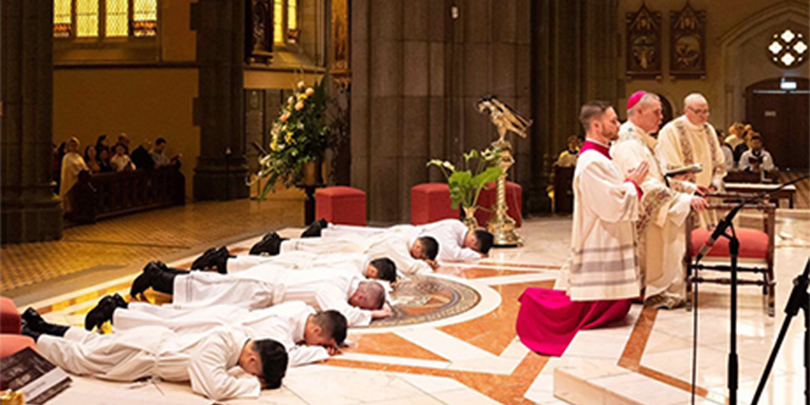
Review and Call to Action inspired by the 2025 Pontifical Yearbook | Source: Vatican News
The Pontifical Yearbook 2025 and the Annuarium Statisticum Ecclesiae 2023, published by the Vatican’s Central Office of Church Statistics, offer more than just numbers — they unveil a profound spiritual and pastoral crossroads for the Catholic Church.
On the surface, the headline may seem optimistic: the global Catholic population has increased to over 1.4 billion. But beneath that rise lies a deepening vocational crisis, shrinking ranks of priests and religious, and a growing gap between the faithful and their pastoral leaders. The latest data compels not just reflection — but bold action.
A Growing Flock — But Who Will Shepherd Them?
Between 2022 and 2023, the number of baptized Catholics worldwide rose by 1.15%, from 1.39 billion to 1.406 billion. Africa led this growth with a 3.31% increase, while Brazil remains the single country with the most Catholics globally (182 million). Yet in almost every region, this surge in numbers is not being matched with a proportionate growth in vocations.
The number of priests declined by 734 globally, falling to 406,996. In Europe and the Americas — regions still home to a majority of priests — the decline is particularly stark, with Europe losing 1.6% and the Americas down by 0.7%. By contrast, Africa (+2.7%) and Asia (+1.6%) posted gains — small signs of hope, but not enough to balance the global pastoral scale.
This leads to the sobering question: Who will care for this expanding Catholic population?
The Vocational Alarm: Seminarians in Decline
Perhaps most concerning is the continued global decline in seminarians, now in its twelfth consecutive year. The number of major seminarians dropped from 108,481 to 106,495 (-1.8%). Once again, only Africa shows positive growth (+1.1%). Europe, Asia, and the Americas recorded declines ranging from -1.3% to -4.9%.
This is not a temporary dip. It signals a deeper problem of generational disinterest in the priesthood, especially in traditionally Catholic regions. If this trend continues, a crisis of sacramental availability looms — with fewer priests to celebrate Mass, hear confessions, baptize children, and accompany the dying.
A Tilted Church: Imbalance in Pastoral Resources
The Vatican’s data reveals a worrying pastoral imbalance between continents. For instance:
• South America holds 27.4% of Catholics but only 12.4% of priests.
• Africa has 20% of the global Catholic population but just 13.5% of priests.
• Europe, with only 20.4% of Catholics, still holds 38.1% of the world’s priests.
These figures suggest a growing disparity in sacramental access — and underscore the need for more equitable distribution of missionary personnel, better inculturation of pastoral models, and urgent reforms in seminary recruitment and formation.
Deacons and Religious: A Modest Counterbalance
There are some signs of life: permanent deacons grew by 2.6% worldwide, now numbering 51,433. North America and Oceania led this growth. Deacons offer invaluable support in pastoral ministry, especially in areas with priest shortages. But their numbers are still modest, and in many places, they are underutilized.
Meanwhile, the number of religious sisters — long the backbone of Catholic health care, education, and parish life — continues to decline, from 599,228 to 589,423 (-1.6%). Europe recorded the steepest drop, reflecting the aging religious population. Encouragingly, Africa and Asia saw increases in women religious — a sign of shifting spiritual vitality.
A Church in Transition: Urgent Questions for the Future
The statistics confirm that the Church is moving southward — in population, in vitality, and potentially in leadership. Africa and Asia are fast becoming the new heartlands of Catholic growth. But with this shift comes a challenge: will the global Church recognize, support, and invest in these regions accordingly?
Will vocations be nurtured where faith is flourishing — and will institutional resources follow the faithful?
A Call to Action: The Harvest Is Plenty, But the Laborers Are Few
The Church cannot remain passive in the face of these trends. The declining numbers of priests and seminarians demand:
• Aggressive investment in youth and vocation ministry, especially in Africa, Asia, and Latin America.
• Innovative pastoral models, including greater use of lay catechists, deacons, and religious in frontline ministry.
• Global missionary solidarity, where vocations from the Global South are empowered to serve both locally and internationally.
• Reform in seminary life, making it more spiritually nourishing, pastorally grounded, and culturally relevant.
• Renewed evangelization in Europe and the Americas, where secularization has dimmed the appeal of religious life.
Final Word: “The Church Must Breathe With Both Lungs”
Pope St. John Paul II once said that the Church must breathe with “both lungs” — East and West, tradition and renewal. Today, the Church must also learn to breathe across hemispheres — North and South, old world and new.
The latest Vatican statistics should not be seen as discouraging, but as a clarion call. They invite the global Church to recognize the shifting tides, to embrace the dynamism of emerging regions, and to respond with urgency, creativity, and courage.
The fields are ripe for harvest. Will we send laborers?
Review based on: New Church statistics reveal growing Catholic population, fewer pastoral workers from Vatican News (www.vaticannews.va).